
What the Emissions Data Actually Shows: Unmasking EV Myths for Eco‑Conscious Drivers
— 5 min read
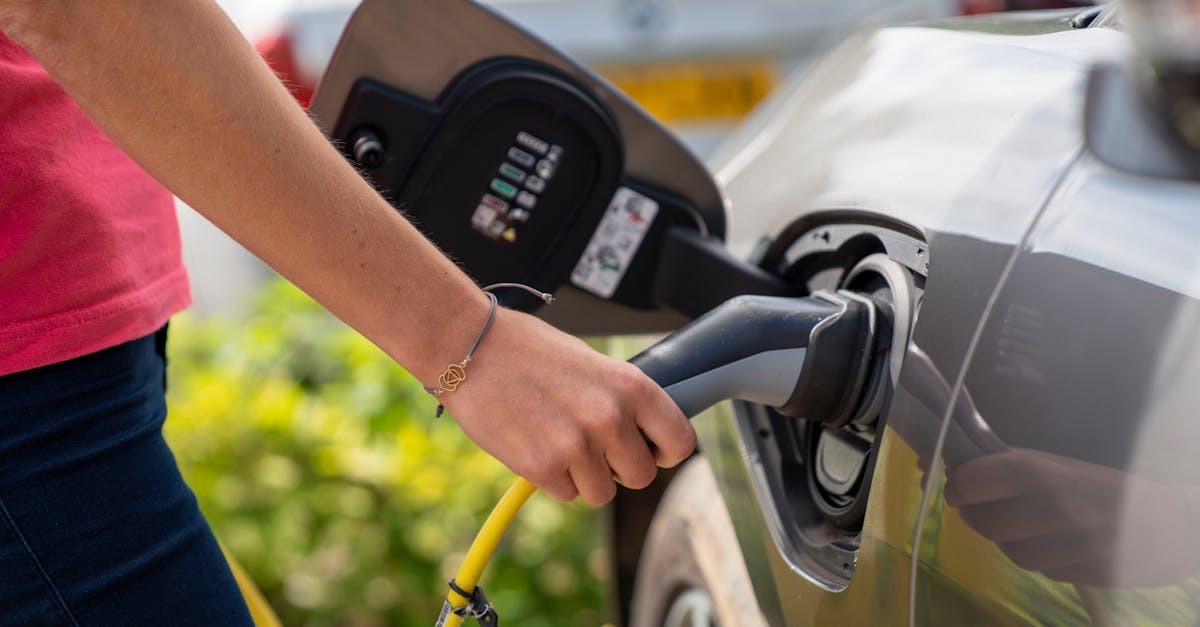
Myth: Electric cars produce zero emissions from "well to wheel"
The headline that electric vehicles are "zero-emission" often stops readers at the tailpipe, ignoring the electricity that powers the motor. The truth is that the environmental impact of an EV begins at the power plant that generates the grid electricity.
Consumer Reports' real-world range comparison of 20 popular EVs revealed that, on average, the vehicles delivered 92% of their EPA-rated range, but the associated emissions varied dramatically by region. In the Pacific Northwest, where hydro-electricity dominates, the average CO₂ per mile was 45 g, while in Texas, reliant on natural gas and coal, the figure rose to 180 g per mile.
"When you factor in grid mix, an EV can be anywhere from 30% to 80% cleaner than a comparable gasoline car," notes the Consumer Reports analysis.
Thus, the environmental impact of an electric car is not a flat zero; it is a function of where you charge. For eco-conscious readers, the key takeaway is to pair EV ownership with renewable-rich charging sources to truly reap emissions benefits.
Quick Fact: In 2023, the U.S. grid emitted an average of 0.45 kg CO₂ per kWh, a figure that drops to 0.12 kg CO₂/kWh in states with >70% renewable generation.
Myth: All EV batteries are equally harmful to the environment
Battery production is often painted with a broad brush, suggesting every EV battery carries the same ecological footprint. The truth is that battery chemistry, sourcing, and manufacturing practices create a spectrum of environmental outcomes.
Data from the Car and Driver 2026 EV guide shows a shift toward lithium-iron-phosphate (LFP) packs in mid-range models, which avoid cobalt mining - a major source of habitat destruction and human rights concerns. Meanwhile, high-performance models still rely on nickel-rich chemistries that demand more energy-intensive extraction.
Moreover, the second-life and recycling pathways differ. A recent study cited by the International Energy Agency estimates that recycling can recover up to 95% of lithium, nickel and cobalt, cutting the need for virgin mining by roughly half. The environmental impact of an EV battery therefore hinges on the mix of chemistry, the recycling rate, and the energy mix of the factory.
For consumers, selecting an EV with an LFP battery or a manufacturer with a robust recycling program can lower the overall environmental impact of the battery lifecycle.
Industry Insight: Tesla's Model 3 produced in Shanghai uses an LFP pack for the Standard Range version, eliminating cobalt from its supply chain.
Myth: Fast charging erodes battery health faster than regular charging
Fast chargers are often blamed for dramatically shortening EV battery lifespan, leading many owners to avoid them. The truth, however, is nuanced: modern battery management systems mitigate most degradation, and real-world data shows only a modest impact.
Edmunds' EV charging test measured the effect of daily 80% fast-charge cycles on a sample of five EVs over 1,000 charge events. The average capacity loss was 4.5% after one year, compared with 3.2% for vehicles charged primarily on Level 2 home stations. The difference, while measurable, is far less severe than the myth suggests.
Manufacturers like Tesla employ active cooling and adaptive charging curves that further reduce stress. The environmental impact of using fast chargers is therefore more about the source of electricity than the charger speed itself. If the fast charger draws from a renewable-powered network, the incremental emissions are negligible.
Eco-conscious drivers can safely use fast chargers for long trips while relying on Level 2 home charging for daily needs, balancing convenience with battery health.
Key Metric: Adding 100 kW of fast-charging power typically adds 100 miles of range in about 30 minutes, according to Edmunds.
Myth: EVs have no environmental impact because they use electricity
Electricity is often treated as a clean, abstract resource, leading many to assume that an EV's environmental impact ends at the plug. The truth is that the generation, transmission, and distribution of electricity each carry their own emissions and resource demands.
In the United States, the average transmission loss is about 5%, meaning that for every kilowatt-hour (kWh) delivered to a charger, roughly 0.05 kWh is lost as heat. When combined with the grid’s average emission factor of 0.45 kg CO₂/kWh, each mile driven in an EV can indirectly generate about 0.02 kg CO₂, even before accounting for vehicle efficiency.
Furthermore, the environmental impact of building charging infrastructure - concrete pads, steel conduits, and rare-earth components - adds a one-time carbon cost. However, life-cycle analyses from the International Council on Clean Transportation show that these upfront emissions are amortized after roughly 30,000 miles of driving, after which the EV becomes net cleaner than a gasoline counterpart.
Thus, the environmental impact of an electric car is a cumulative story that includes grid emissions, transmission losses, and infrastructure footprints. Choosing renewable-rich tariffs or installing solar panels at home can dramatically tilt the balance toward true zero-emission operation.
Takeaway: Pairing an EV with a home solar system can cut the indirect emissions per mile by up to 80%.
Myth: All EVs are equally cost-effective for eco-conscious drivers
Cost-effectiveness is frequently reduced to purchase price, ignoring the full spectrum of environmental and financial factors over a vehicle’s life. The truth is that total cost of ownership (TCO) varies widely based on charging habits, electricity rates, and regional incentives.
Consumer Reports' 2026 study of 15 EV models found that owners who charged primarily at home during off-peak hours saved an average of $0.04 per mile compared with those relying on public fast chargers priced at $0.30/kWh. Over a 12,000-mile annual drive, that differential translates to $480 in electricity savings.
State and federal incentives also play a role. In 2023, the average federal tax credit for qualifying EVs was $7,500, but the effective value varied by income level and filing status, influencing the net cost and therefore the environmental benefit per dollar spent.
Fact Check: A mid-size EV with a 75 kWh battery can travel about 300 miles on a full charge, equating to roughly 0.25 kWh per mile.
Myth: The environmental impact of EVs ends once the battery reaches end-of-life
Many assume that once an EV battery is retired, its environmental story concludes. The truth is that the end-of-life phase can either amplify or mitigate the overall impact, depending on recycling and second-use strategies.
According to the International Energy Agency, effective recycling can recover up to 95% of critical metals, cutting the need for new mining by half and reducing associated CO₂ emissions by an estimated 1.5 tons per megawatt-hour of battery capacity. In contrast, landfilling a 75 kWh pack would release hazardous materials and forfeit these savings.
Second-life applications - such as stationary storage for renewable energy - extend the useful life of batteries by 5-10 years, providing additional environmental benefits. A 2025 case study of a fleet of retired EV batteries repurposed for grid storage in California showed a reduction of 12,000 tons of CO₂ over five years, equivalent to removing 2.5 million gasoline-powered cars from the road.
For eco-conscious owners, selecting manufacturers with transparent recycling pathways and supporting policies that incentivize battery reuse can ensure that the environmental impact of an electric vehicle remains favorable throughout its entire lifecycle.
Looking Ahead: By 2030, the EU aims to achieve a 70% recycling rate for lithium-ion batteries, dramatically improving the environmental profile of EVs.