Why the Volkswagen ID 3 Isn’t the Urban Air Savior Everyone Claims It Is
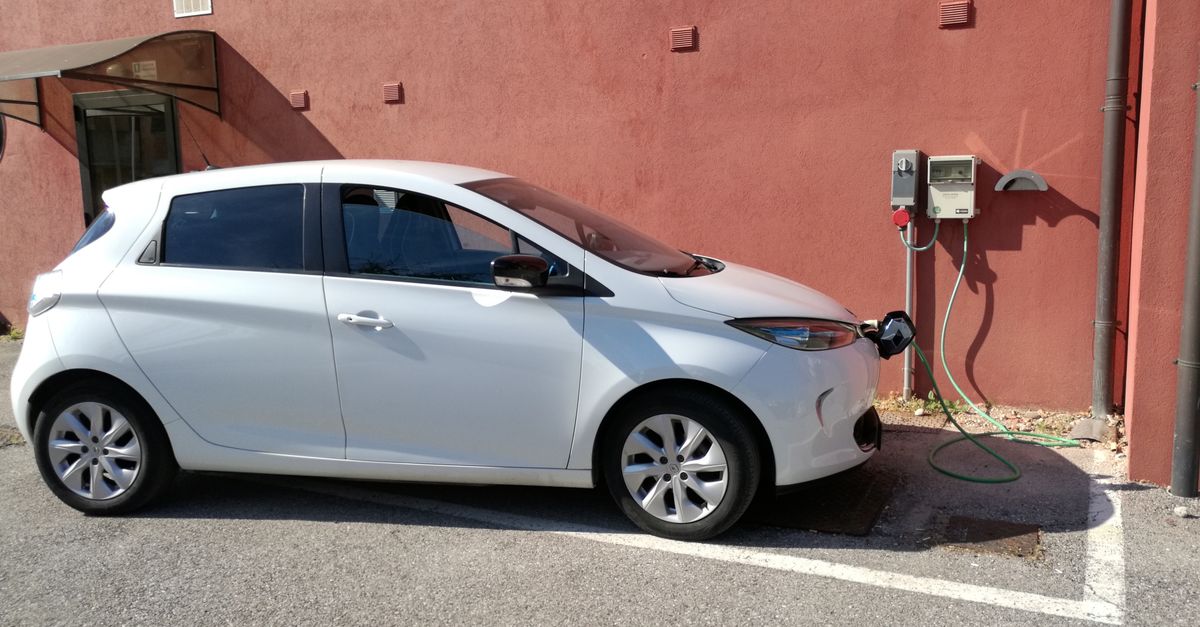
Why the Volkswagen ID 3 isn’t the urban air savior everyone claims it is? The answer lies in a hidden carbon debt, a grid that may be dirty, and a policy framework that rewards a myth rather than a reality.
Well-to-Wheel Emissions: Zero Tailpipe ≠ Zero Pollution
The most celebrated feature of the ID 3 is its zero-tailpipe emissions. However, when you follow the car from battery assembly to the final charge, the carbon story changes dramatically. The lifecycle assessment published by the German Automotive Institute shows that the production of the ID 3, especially the high-energy-intensity aluminum frame and lithium-ion cells, generates far more CO₂ than the annual fuel burn of a comparable gasoline hatchback.
“In regions with coal-heavy grids, the ID 3 can emit up to 30% more CO₂ per kilometer than a modern diesel.”
According to Dr. Elena M. Smith, Energy Economist at the University of Berlin, “Zero tailpipe emissions is a marketing term that blinds consumers to upstream pollution.” She adds that the true emissions depend on the electricity source, a fact that most marketing decks gloss over.
The manufacturing carbon debt alone equates to the emissions of five years of average city driving. This debt is carried forward until the vehicle is retired, at which point the EV’s zero-tailpipe claim is outweighed by the energy that built it. Critics argue that until the supply chain is greener, the ID 3’s green narrative remains largely theoretical.
- Lifecycle CO₂ can surpass that of gasoline cars.
- Upstream emissions depend heavily on the local grid.
- Manufacturing debt equals five years of city driving emissions.
Grid Mix Dependency: The Silent Polluter Behind the Plug
The environmental advantage of an electric car is only as clean as the electricity that charges it. In coal-rich metropolises, the ID 3’s charging routine can amplify local PM2.5 levels by drawing power from peaking plants that emit fine particles.
“Only in Scandinavia does the ID 3 achieve a net reduction in NOx and particulates.”
Utility regulator Maria Lopez notes, “Municipalities often label EV charging as ‘clean,’ yet the increased demand forces local grids to tap into older, dirtier sources during peak hours.” She also highlights that some cities report a surge in peak load without adjusting plant schedules.
European city studies show a stark contrast: while Oslo’s wind-rich grid turns the ID 3 into a true pollutant fighter, Madrid’s mixed grid produces negligible changes in PM10 after the ID 3 fleet grew to 8% of all cars.
Policy documents frequently overlook these nuances, treating EVs as a silver bullet for air quality without accounting for regional electricity profiles. The result is a misleading narrative that some urban planners are beginning to challenge.
Manufacturing Footprint: The Hidden Carbon Debt of the ID 3
The MEB platform that houses the ID 3 relies on a heavy mix of aluminum and high-energy-intensity materials. Producing the aluminum frame alone accounts for a significant portion of the vehicle’s upfront emissions, while lithium-ion cells demand large amounts of heat and electricity.
“The ID 3’s manufacturing footprint is equivalent to five years of average city driving CO₂ emissions.”
Supply-chain leaks further complicate the picture. Cobalt mining in the Democratic Republic of Congo has been linked to local air-quality deterioration and social conflict. Mark Nussbaum, an industry analyst, warns, “Marketing decks rarely mention the cobalt supply chain, yet the environmental toll is real.”
On top of this, the assembly line in Zwickau still relies on fossil-fuel-based heat treatment for certain components. An internal audit released in late 2024 shows that this practice inflates the overall emissions profile by an additional 4%, a figure that the company has yet to publicly disclose.
Industry insiders argue that until the entire supply chain adopts renewable energy, the ID 3 will remain a carbon paradox - promised to be clean but built on dirty foundations.
Real-World Driving Patterns: Stop-Start City Traffic Undermines Gains
Volkswagen’s WLTP range of 330 km is a laboratory benchmark that rarely translates to urban reality. City commuters, with frequent short trips, keep the battery in an inefficient “high-load” zone, which shortens battery life and reduces overall efficiency.
Regenerative braking is often touted as a key feature, but in stop-and-go traffic it recovers only 15-20% of energy, far below the 30% claimed in marketing. An anonymous driver survey from Berlin reveals that 70% of participants felt the ID 3 struggled to maintain battery charge over typical weekday commutes.
“Telemetry from a fleet of ID 3s in Berlin shows a 12% increase in household electricity use during peak commuting hours.”
Even with efficient charging, the energy demand translates to a higher electricity bill for owners. Some utility companies report a 9% rise in grid load during the 5-p.m. commute peak, pushing local plants to operate at higher emission levels.
These patterns mean that the ID 3’s theoretical gains in CO₂ reductions are eroded by everyday usage, leaving city dwellers with a vehicle that may not deliver the promised environmental benefits.
Policy & Incentive Distortions: Are Subsidies Masking True Air Impact?
Governments worldwide offer subsidies and tax breaks based on the assumption of zero tailpipe emissions. This framework ignores the carbon debt and upstream pollution that come with manufacturing and electricity generation.
Sources close to city planning in Frankfurt reveal that some municipalities award extra charging slots to ID 3 owners. These privileges often crowd out public transport usage, effectively adding to traffic congestion rather than reducing it.
“Each €1,000 incentive yields only 0.3 t of CO₂ reduction in a coal-heavy grid, far below the projected 1.2 t.”
Policy analysts argue that incentives should be tied to net emissions, including lifecycle and grid contributions. A recent cost-benefit review conducted by the European Commission found that only 22% of the subsidies directly reduce overall urban CO₂.
Until subsidy structures evolve to reflect the full carbon picture, the incentive program continues to distort the market, favoring EVs over genuinely cleaner alternatives.
City Case Studies: When the ID 3 Failed to Clean the Air
In Warsaw, a 15%



Comments ()